The TMJ is the joint just in front of our ears that attaches the lower jaw to our skull. It is a complicated and unique joint that is interconnected to a larger Stomatognathic system – our swallowing, talking, chewing, breathing system.
The TMJ joint itself is a condylar joint with a fibrocartilage disc. This joint hinges, slides and glides through the motion of opening/closing, moving side to side and protruding the jaw forwards/backwards. And the disc gives the joint some shock absorption.
The Stomatognathic system is a web of structures including our teeth, jaws, muscles and surrounding tissues (like fascia). This system regulates our chewing, talking, swallowing, but also has a lot of influence on our breathing and balance due to the rich network of nerves running to the cerebellum from our TMJ. It is the ultimate compensatory mechanism and a big reason why we clench our teeth when lifting a heavy object or stick out our tongue when concentrating on a difficult task.
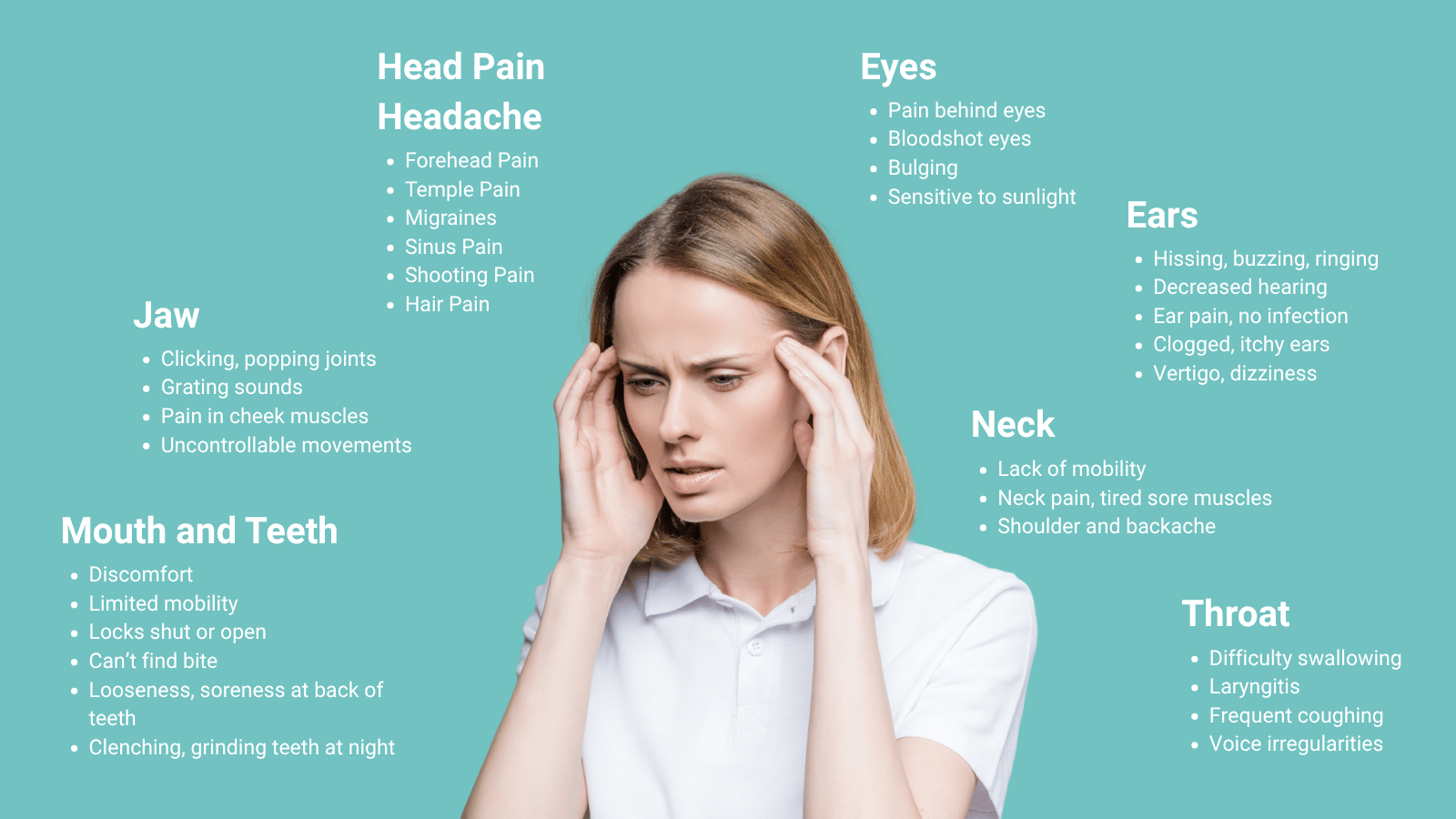
What are the symptoms of TMJ disorder?
Signs that you may be experiencing a TMJ disorder include:
- Trouble chewing or swallowing.
- Face, jaw or neck pain
- Headaches
- Teeth grinding and/or clenching
- Mouth breathing
- Jaw popping or locking
Typical chronic pain in this area is often due to changes in tension in soft tissues (muscles, ligaments, fascia). Activities that can exacerbate this include our posture such as sitting at a computer with a forward head and chin posture puts a lot of stress and strain on the muscles/joints of our head and neck. Sleep disturbances are also common resulting in vivid dreams, snoring, grinding (bruxing), or waking up repeatedly throughout the night.
What causes TMJ/stomatognathic disorders? Our TMJ can experience dysfunction due to micro-trauma, for example posture based, grinding while sleeping (bruxism) or clenching of the jaw muscles. Macro-trauma can also cause big problems with this – like lengthy dental work, intubation or an old fashioned blow to the jaw. Connective tissue disorders, and other more systemic disorders can also impact the healthy function of this system.
What can be done to relieve TMJ pain?
A full assessment of the jaw structures, neck structures and source of pain is needed to address underlying causes of TMJ dysfunction. Sometimes simple biomechanical posture changes or work station changes can help. Manual therapy to relieve tight/tender muscles, ligaments, joints and fascia makes a big difference to improve immediate pain and restore a more healthy range of motion/function.
With teeth grinding, a night guard from your dentist may be needed to protect your teeth from wear or cracking (leading to extensive dental work), but does not address the underlying issue that is causing the bruxing/grinding.
Balance and functional movement may also be part of the assessment of this system as a whole.
Are you experiencing jaw pain, headaches or finding your sleep disturbed by grinding? Book in today for a full assessment with a trained practitioner.
f you would like to learn more or book an appointment with one of our chiropractors email us at info@evolvevancouver.ca.
Please note that any advice in this article doesn’t replace personalized medical advice from a professional.
Article by Dr. Kathryn Baker